Keynote Speakers

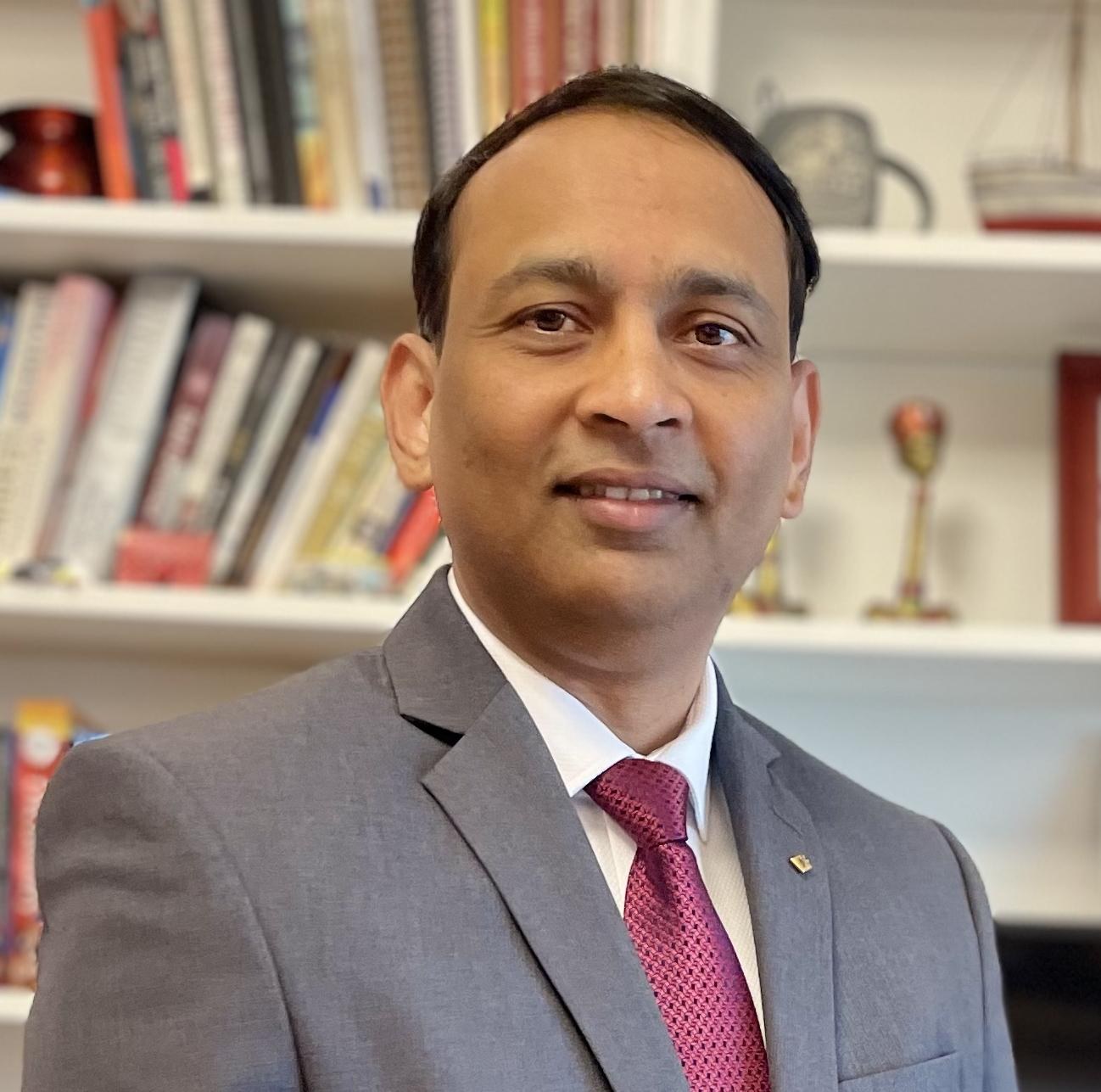
Portrait of Prof. Hatem Zeineldin

Prof. Hatem Zeineldin

Professor and Chair of the Department of Electrical Engineering at Khalifa University, UAE.

Internationally recognised researcher in Distribution System Protection, Islanding Detection, Microgrids and Smart Grid Design.

Keynote Title:

Micro-grid Implementation: Challenges and Solutions

Abstract:

Micro-grids are small scale power networks that can consist of distributed energy resources (DERs), energy storage systems (ESS), and loads with the capability of operating in grid-connected or islanded mode. Despite their multiple advantages, there are some technical issues related to the control, stability and protection of micro-grids. The design challenges as well as solutions proposed for micro-grids are highly dependent on the type of the Distributed Generation being used (synchronous or inverter based) as well as the mode of operation (islanded or grid connected). This talk will shed some light on some of the challenges associated with micro-grids dominated by inverter based DG and operating in an islanded fashion. The impact of micro-grid droop control on load flow analysis, stability and protection will be highlighted. Furthermore, utilizing the DG interface control to facilitate micro-grid protection and enhance micro-grid stability will be discussed.

Portrait of Prof. Mousa Marzband

Prof. Mousa Marzband

Professor at King Abdulaziz University, Saudi Arabia.

Internationally recognised researcher in Sustainable Energy Systems, Renewable Energy, Smart Grids, Energy Storage, Hydrogen and Artificial Intelligence.

Keynote Title:

AI-Driven Energy Transition: Intelligent, Flexible, and Resilient Integrated Energy Systems

Abstract:

The global energy transition is entering a new phase in which renewable energy integration, electrification, hydrogen, energy storage, and artificial intelligence are converging to reshape the architecture and operation of modern energy systems. Future energy infrastructures must move beyond conventional centralized paradigms toward intelligent, flexible, decentralized, and resilient systems capable of coordinating diverse energy resources, technologies, consumers, and markets.

This keynote presentation provides a perspective on the emerging role of artificial intelligence and advanced optimization in the energy transition, with a particular focus on integrated energy systems, smart grids, microgrids, and multi-energy infrastructures. It explores how AI-driven forecasting, intelligent control, data-driven optimization, and advanced decision-making can enhance the operation, planning, and management of increasingly complex energy systems with high penetration of renewable energy resources.

The presentation highlights recent advances in the integration of renewable energy, energy storage, hydrogen, and electrified transportation, including electricity–hydrogen integrated systems, power-to-hydrogen technologies, and Vehicle-to-Grid/Vehicle-to-X (V2G/V2X) solutions. These technologies are considered not only as emerging components of future energy infrastructures, but also as flexible resources capable of supporting energy balancing, grid services, market participation, and system resilience.

A key focus of the keynote is the evolution toward flexibility-oriented and market-based energy systems, including P2P and transactive energy markets, prosumer participation, demand-side flexibility, distributed energy resource coordination, and congestion management. The presentation discusses how intelligent coordination among prosumers, storage systems, electric vehicles, and flexible loads can improve renewable energy utilization while addressing network constraints and enhancing economic efficiency.

The keynote also addresses the growing importance of energy system resilience under uncertainty and extreme events, emphasizing the role of distributed resources, storage, hydrogen, intelligent control, and AI-enabled decision-making in maintaining secure energy supply and supporting rapid system recovery.

Drawing on recent research and selected case studies, the keynote concludes with a forward-looking vision of AI-driven integrated energy systems in which electricity, hydrogen, transportation, storage, energy markets, and flexible demand are seamlessly coordinated. The presentation identifies key technological, operational, and market challenges and outlines future research directions toward more intelligent, adaptive, resilient, and sustainable energy infrastructures.
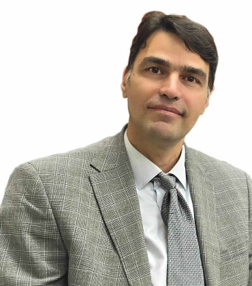
Portrait of Prof. Vinod Khadkikar

Prof. Vinod Khadkikar

Professor at Khalifa University, Abu Dhabi, UAE.

Co-Editor-in-Chief of IEEE Transactions on Industrial Electronics

Internationally recognised researcher in Power Electronics, Renewable Energy, Microgrids, Power Quality, Electric Vehicles and Distribution Systems.

Keynote Title:

Electric Vehicle to Vehicle (V2V) Charging

Abstract:

Recently, Electric Vehicle to Vehicle (V2V) power sharing is emerging as an alternate solution to range anxiety and limited charging infrastructure challenges associated with electric vehicles (EVs). Although it appears as a straightforward way to charge an EV from another EV, there are many issues associated with V2V charging and its deployment. Most importantly, different commercial EVs have different battery voltage levels, ranging from 350V to 450V DC (or even higher in some cases), due to which direct connection between two EVs may not be always feasible. A higher potential battery (for example, 400V) can charge lower potential battery (for example, 350V) directly without any interface. However, opposite (350V to 400V charging) is not possible. Additionally, for V2V to be effective, a complete framework is required where the users can find and share their charge/power with other EV users in a reliable manner and from trusted sources. This keynote briefly discusses the state-of-the-art EV charging options, V2V concept, requirements for actual V2V power transfer, and speaker’s recent research contributions in V2V area.